
All new posts will appear over here. Feel free to stop by.
- Mat
Thursday, 3 July 2014

Wednesday, 5 March 2014
Audio Journal: 04/03/2014 - R5, IndigO2, London

When did teen-rock get so
grown-up?
Last
night we found ourselves at IndigO2 for a concert by R5. Never heard
of them? Neither would I were it not for my seven-year-old eldest
daughter's love of two Disney Channel shows - the series Austin And
Ally and that channel's film Teen Beach Movie.
Both
star a blonde, tousle-haired
young guy called Ross Lynch, who as well as singing through both
shows also happens to be a guitarist and vocalist in a band called
R5, thus named because the group consists of Lynch and sundry
brothers (and a sister).
So,
at least on 'paper'
this all sounds like familiar Disney territory - a young heartthrob,
a contract with Disney's Hollywood Records label, a slight whiff of
the manufactured boyband (except for the girl, of course). But then
there are the following facts that need to be borne in mind:
- They play real instruments, live, with no backing tapes or miming or anything like that
- They have an album's worth of really good, comparatively mature songs that owe more to sun-drenched California than teen-pop
- They rock
Pop
music, at its most irritating, has an infectious, subversive quality.
It also has the capacity to feel artificial, churned-out on some vast
production line under Communist-era-style portraiture
of some gurning industry oligarch like Simon Cowell. R5, in contrast
to a One Direction or whoever else the kids are listening to these
days, feel like a proper
band that just happen to have received a massive break thanks to their
frontman, who, on the evidence of his onstage demeanour, is more
than happy to just be a part of the band rather than accept the
nominal limelight.
Ross
Lynch's
humble role in the band may have, however, been lost on an audience
of swooning girls and their mothers. And fair enough. Plus it's sort of nice to see kids
following what looks and feels like a proper band compared to some of
the horrors available out there.
This
was my eldest daughter's first full concert (her first concert proper
was the
Chili Peppers at Knebworth in 2012, but she fell asleep early on in
the set and we left), and also the first concert for our
six-year-old youngest daughter. Both had a great time. As did their
mother.
As did I.
Monday, 3 March 2014
Audio Journal: 03/03/2014 - Rufus Wainwright 'Vibrate' + 'Live From The Artists Den'

To
appreciate Rufus Wainwright's idiosyncratic approach to music, one
only needs to listen to the all-too-brief 'Oh What A World' which
opened the singer's third album,
Want. Here are all the sides of the artist compressed into a three
minute curiosity - a bit of Leonards Bernstein and Cohen, a spoonful
of Stephen Sondheim, a pinch of George Gershwin, a lot of Judy
Garland and a measure of Antony Hegarty and Holden Caulfield.
Theatrical, wistful, louche, literate, spoiled, yearning - 'Oh What A
World' is all of these things and maybe more, a soaring, triumphant
overture for the both throwaway and the earnest.
Not
for nothing did Caitlin Moran describe Wainwright as having 'all the quiet don't-mind-me demeanour of a pissed
rainbow on a trampoline',
but the extravagance for which Wainwright has been known is, save for
the poppy 'April Fools' and decadent 'Foolish Love', is either
missing from Vibrate or exposed as the mere fallacy of reputation.
Instead, the compelling singer-songwriter is allowed to emerge, the
sensitive soul blessed with a beguiling voice as comfortable singing
about promiscuity, Greek boys and addiction as he is a perpetual
romantic yearning for the world to stand still, for love, for
appreciation or for the admiration of his father; a self-proclaimed gay messiah capable
of giving his old friend Jeff Buckley a run for his money with his
cover of Cohen's 'Hallelujah' or singing irreverently about dancing
hopelessly to Britney Spears on the whimsical baroque track that
gives this best of compilation its title.
In time Wainwright may
receive the same critical appreciation that his mentor / saviour
Elton John or Billy Joel now humbly accept, and Vibrate will go a
long way in raising the profile of one of modern music's most
original voices.
Released
concurrently with Vibrate, Live From The Artists Den captures
Wainwright performing at The Church Of The Ascension in Manhattan,
and possibly provides more evidence of the singer's flamboyance than
on Vibrate, mostly thanks to a pair of outrageous
gold lame slacks, red metal-studded loafers and sideburns that are
reminiscent of Travolta in Pulp Fiction. Running through most of his
Mark Ronson-produced sixth album Out Of The Game, that album's mature
pop leanings transfer far better to a live setting than on record.
'Rashida' and 'Welcome To The Ball' swing with a glam insousiance,
while the rueful 'Out Of The Game' (complete with a paper mask of
Helena Bonhan-Carter) and the optimistic 'Montauk' finds Wainwright
putting his past to bed with a polite sense of humour.
The
set also
includes 'One Man Guy', originally recorded by his father Loudon
Wainwright III, a track which would sound positive and affirming if
it didn't have an onanistic undertone, while the dutiful son also tearfully tackles his late mother Kate McGarrigle's 'On My Way To Town'. Ronson
puts in an appearance on the synth drama of 'Bitter Tears', but
inevitably it's the fan favourites of the stirring '14th Street' and
'The Art Teacher' that are the major highlights.
Vibrate and Live From The Artists Den are released 03/03/2014
Thanks to Louisa
Vibrate and Live From The Artists Den are released 03/03/2014
Thanks to Louisa
Saturday, 1 March 2014
Audio Journal: 01/03/2014 - St. Vincent 'St. Vincent'

Annie
Clark, better known as St. Vincent, knows
how to make odd records. Her 2012 collaboration with David Byrne, Love This Giant, found her screwball approach to deconstructing
rock and pop music blended with rich brass arrangements, Clark's
distinctive voice harmonising with the elder statesman Byrne like a
sort of bewitching counterpoint to the former Talking Head's own
wonky sensibilities.
For
her eponymous fourth album, Clark once
again dips her toe into the strange funk offered up on Love This
Giant, fuses it with dirty electronics and adds in typically
oversized riffs that sound totally out of place on what is
essentially a precision-honed pop record. Those riffs belong on a
Seventies record, filled as they are with garagey jerkiness and hoary
levels of distortion, hovering bluntly and somewhat self-consciously
above squelchy synths and rhythms that could have been borrowed from
a Buck 65 or Money Mark record. Opener 'Rattlesnake' has a bold,
clipped sound filled with unexpected left turns and a smooth
sensuality that really shouldn't work (but does anyway) while
'Digital Witness' - one of the album's strongest tracks - feels like
it should have been part of the Byrne collaboration.
'Prince
Jonny' and 'I Prefer Your Love' are without
question the album's most prominent pop moments, being minor dramas
that sit somewhere between emotional tragedy and the sort of stagey
ballads that have quirky off-Broadway musical written all over them;
these songs are vivid, emotional masterpieces that showcase the
tender heights that Clark's voice can ascend to, as well as
highlighting the filmic realism of her lyrics. Elsewhere 'Birth In
Reverse' offers a skewed New Wave effervescence mixed in with the
sort of clangorous punk riffs that Gang Of Four made their own.
If
St. Vincent put her mind to it, she would be more than capable of
knocking out glossy pop that would show
most chanteuses a thing or two. Instead, she's more comfortable
occupying that weird musical hinterland frequented by Björk and
Polly Scattergood, and the result is much more interesting as a
consequence.
Related: a review I wrote for Clash of St. Vincent and David Byrne at the Roundhouse in London last year can be found here.
St. Vincent was released on 24/02/2014.
Thanks to Matt.
Saturday, 7 December 2013
Audio Journal: 07/12/2013 - Christmas songs, Dave Brubeck, Boxcutter, Physical Therapy, Robert Koch
A
few weeks back I was tasked with 'sorting out the Christmas songs'.
This made for a novel opportunity to be relatively useful in the run
up to Christmas; normally, my sole duties consist of fetching in the
decorations, helping unpack them, and then putting the empty boxes
back again. The request followed the complete wiping of Mrs S's iPod earlier in the year and the slow and tedious process of rebuilding her library again. As
with most things - proposing to her, recognising that our cat was
seriously ill, any household chore I'm handed - I prevaricated for
ages and only completed the task at the weekend, more or less at the
same time as the tree was being put up.
We
have, it seems, some 260 Christmas songs. These range from what might
be regarded as pop staples - Jona Lewie's 'Stop The Cavalry', Wham!'s
'Last Christmas' and so on - some classical and choral things that
sound atmospheric and festive but which often get bypassed in favour
of more accessible fare, a few lesser well known things by Badly
Drawn Boy and Summer Camp, a bit of Rat Pack, Phil Spector's
excellent Christmas album, some hymnal Johnny Cash stuff, a
glamtastic Showaddywaddy song purloined from my parents' vinyl
collection and even a Joey Ramone track. Over time I've added things
like The McGarrigle Christmas Hour - a true family affair of Kate and
Anna McGarrigle and their sundry offspring, including Rufus and
Martha Wainwright and family friends like Teddy Thompson - but my dour
Josh T. Pearson contributions seemed to get permanently deleted from
her library when it became corrupted, much to her relief.
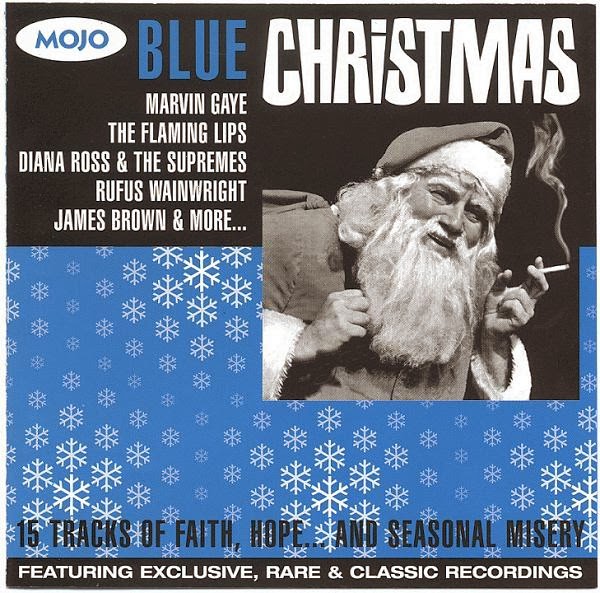
In
spite of that vast library, Christmas listening tends to start with a
ritual playing of Blue Christmas, a Mojo covermount CD featuring
slightly less optimistic songs from James Brown, Ed Harcourt, Flaming
Lips, Otis Redding and many others. It's intentionally a world away
from the cheeriness of most Christmas songs, and I think we elect to
listen to this at the start of festivities to deliberately steer
clear of the season's commercialism-masquerading-as-joy; or maybe
because we like to make our own family traditions at this time of
year.
This
year, in a moment of sentimentality toward Christmas, I decided that I
really wanted to find an album of Christmas songs performed in a jazz
style. Despite having spent a lot of this year furthering my interest
in jazz, I'm still a bit lost in the genre, and it proved to be the
case with this search for a Christmas album that there's an awful lot
of dross around. In the end, I settled on an album of lovely piano
jazz by the late Dave Brubeck.
I
knew I was on safe ground with Brubeck; though I detested it in my
youth, 'Take Five', the 1959 track he is best known for, has become a
piece that I listen to a lot these days. I even have an album on
which Brubeck performs 'Some Day My Prince Will Come' from Disney's Snow White, and I felt reasonably assured that him turning his pianist hands
to a suite of Christmas songs would be of a high standard, and that's
exactly how it turned out to be. One reviewer on Amazon described it
as being perfect for nights in front of the fire with a mug of cocoa;
I neither have a fireplace nor do I like cocoa, but I completely get
where he was coming from, and I can't begin to describe it better
myself.

So
that all feels terribly grown up and mature. Although I seem to have
consumed a lot more Christmas tunes so early in December than is good
for me, I've spent the rest of the time listening to various
electronica releases that have been fervently landing in my inbox in
recent weeks.
Physical
Therapy's Non-Drowsy is one such release. A free seven-track EP, the
release jump-cuts between a mutant strain of classic piano house and
a deconstructed variant of late Eighties percussive acid techno.
Listen to the urgent standout track 'Coffee' from the EP here or
below.
Another
electronica release I've been enjoying is Boxcutter's Gnosis EP.
Boxcutter has previously released stuff on Mike Paradinas's Planet Mu
imprint, and this release does include moments of frenetic bass
wobbles and percussive wackiness that befits a lot of what that label
has become known for. That's balanced out by some absorbing ambient
passages replete with sky-scouring prog guitar, drawing parallels
with some of Krautrock's less motorik moments, as well as some
spine-tingling synth hooks along the way.
Also
in my eardrums has been Unpaved by Robert Koch, an EP soundtrack to
accompany a film by Lukas Feigelfeld. This is my first exposure to
Koch's work, and it reveals itself on this release to be a
carefully-structured micro-score with ambient reference points and
some rather lovely piano. An extract from the film of the same name
can be viewed here or below.
Friday, 15 November 2013
Audio Journal: 15/11/2013 - Avatism, Colo, Color Film, Hologram
As
I mentioned last time, I have only really listened to Lou Reed and
The Velvet Underground in the last fortnight, but a couple of other
things arrived in my inbox recently which have provided a distraction
from focusing exclusively on Reed's passing.
 |
| Colo 'Holidays' |
The
first is an upcoming single from Colo, which is due out in December
on Ki Records. 'Holidays' is a simple, understated track somewhere
between dreamy instrumental synth-pop and ambient dub, complete with
a soulful vocal texture that sticks with you long after the song's
finished. It's got a lovely, gauzy, Café Del Mar-at-sunset vibe and
it's far too warm for this time of year. Colo's album is due out in
March.
Avatism's
'Adamant' hit my inbox a few weeks ago. Avatism is the alias of
Italian producer Thomas Feriero and contains thirteen tracks of
slick, inventive electronica infused with crisp techno and house
beats, clipped and stirring guitar loops (think Morricone in a techno
setting), dreamy synths and a warm ambient atmosphere. For those of
us who grew up with Nineties dance music it's a dream come true in
the context of micro genres we old guys don't understand; one might even
describe it as mind-expanding in the right circumstances. A remix EP
of tracks from the album has also been released but for the optimal
trip pick up the album and eschew that annoying habit of course
picking favourite tracks (although, if my life depended on it, I'd
say get the monstrous 'Mastodon').
 |
| Color Film 'Until You Turn Blue' |
Color
Film released 'Until You Turn Blue' recently ahead of an LP slated to
arrive in March next year. Without knowing it had just been released
you'd have sworn that 'Until You Turn Blue' had been released in
about 1983, being constructed of jerky guitars, plinky synths and
orchestral stabs, fantastic slap bass and the sort of anguished but
soulful vocal that seemed to die out in the Eighties (it reminds me a
lot of Tears For Fears' 'Broken' from Songs From The Big Chair).
'Until You Turn Blue' was mixed by Gareth Jones, someone who brings
excellence to everything he's ever done.
So
if all of this was intended to serve as a distraction from listening
to Lou Reed and the Velvet Underground, two nice little tracks served
to pull me back in that direction. The first was 'Lou Reed Lou Reed'
by The Auteurs' Luke Haines, a reverential bit of glam-infused synth-pop complete with Reed-style guitar riffery and lyrics that trawl
Reed's life and image. The second was a haunting version of 'Pale
Blue Eyes' by French duo Hologram (Carla Luciani and Maxime
Sokolinski). Hologram released their debut EP earlier this year and
it was one of the things I listened to most during the warmer months,
so hearing their fragile voices, subtle drum machines, gentle guitars
and shimmering synths tackling one of my favourite Reed ballads was a
lovely moment of serendipity.
Listen
to 'Pale Blue Eyes' here or below.
Friday, 8 November 2013
Audio Journal: 08/11/2013 - Lou Reed
 |
| Lou Reed, self-portrait from Facebook |
My
listening habits in the last two weeks centred exclusively on the
music of one artist - Lou Reed. In the days following his untimely
death it seemed the most fitting thing to do.
I
admit that I came to Reed's music relatively late in life; I was
aware of his influence, just like I was aware of Bowie, punk, The
Ramones and so on, but as with all of those things I just figured it
wasn't for me. Until university I only really listened to electronic
music - pop, techno, ambient and so on - but after a while I found my
tastes becoming more eclectic. A key turning point came toward the
end of my second year when I decided to buy a biography of David
Bowie called Loving The Alien by Christopher Sandford from the campus
branch of Waterstone's. I don't know why, but I suspect it was
chiefly to read more about Bowie's Berlin period, whose starkness had
a direct influence on the electronic music I was familiar with.
I
surprised myself with enjoying the passages on how Bowie's love of
The Velvet Underground and its frontman Lou Reed had directly
inspired his Ziggy Stardust alter ego. The sections recounting the
speed anthem 'White Light / White Heat' from the Velvets' second
album were especially vivid, I recall, as was the description of 'I'm
Waiting For The Man'. In my head it sounded wild. Raw. Decadent.
Gritty. I wasn't then in love with New York like I am today but the
idea of Reed singing about buying drugs from a dealer up in Harlem
seemed just about the most thrilling thing I'd heard about in my
early twenties. It sounded a lot more interesting than the song
'Perfect Day' that I'd first heard the year before on the
Trainspotting soundtrack, and which by then had been butchered into
an unlikely star-encrusted advert for the BBC. I knew that track was
about a heroin comedown and so in its own way it was still 'punk' but
'I'm Waiting For The Man' sounded infinitely more appealing. In my
head.
It
took over a year before I bought The Velvet Underground And Nico, the
album that included that song. I'd travelled from my girlfriend's
parents' house in rural Norfolk to North London for an interview with
a big pharmaceuticals firm, part of that painful cycle of third year
soul-selling, and this one had gone really badly. Back at Liverpool
Street station I had hours to kill before a train back to Norwich so
I wandered out of the station and found a branch of Our Price (it's
now a Specsavers) and came out with a copy of The Velvet Underground
And Nico. I studied the sleeve the entire journey back to my
girlfriend's house. It felt like I'd taken a leap into a completely
unknown world, one that was appealing but one that barely made any
sense in amongst the music I'd been consuming up to that point.
At
her house I remember putting it on, realising that I knew 'Sunday
Morning' from the OMD album Liberator and was blown away by 'I'm
Waiting For The Man'; it was better than it had ever sounded in my head. My girlfriend hated it. I think that made me
like it all the more. Last week I was given the chance to contribute
to a piece on Lou Reed's best moments for a Clash piece; I
instinctively chose that track that had first gripped me.
Unfortunately someone else got the honour of writing that one and so
my piece didn't get used (I wrote about Metal Machine Music instead).
Here's what I wrote anyway.
“Like Hubert Selby Jr, Lou Reed always had a penchant for subjects that were completely taboo. This song joyously documented scoring drugs from a Harlem dealer, and would provide the obvious reference point for punk and glam.”
I
rented a room in a house in Colchester that year with a couple in
their forties. Dave was the muso of the couple. I remember coming
home raving about having bought the first Velvets album and, from his
pile of cassettes in the kitchen, he retrieved a copy of Berlin. He
told me that if I loved that album I'd love Reed's solo output. I
didn't believe him, much like I didn't believe that the Velvets
post-John Cale would be any good, and so I approached it cynically,
just as I had with 'Perfect Day'. I concede now that he was right,
and I absolutely love those Lou Reed solo records that I own.
In
the summer that followed I bought a tiny CD-sized book that was
effectively a track-by-track description of every track the Velvets
ever recorded. I think I bought it from Athena. I consumed it avidly
and it became a sort of buyer's guide for the Velvets' music over the
coming years. Better and more comprehensive books have been about the
Velvets and Lou Reed, but I still refer to that tiny book from time
to time. Right now it's on top of a pile of reading material next to
my bed, the product of showing my two daughters pictures of the band
after subjecting them to a cheap Velvets compilation I've been
listening to in the car since I first saw that Reed had died.
 |
| The Complete Guide To The Music Of The Velvet Underground by Peter Hogan (1997) |
So
the past week has seen me listening to more or less everything of
Reed's that I have in my collection (including listening to Metal
Machine Music as the backdrop to various Tube journeys; it works
surprisingly well for that). I genuinely thought Reed would live
forever, as I suppose he will through his music and reputation. He
had long ago sorted the addictions that had informed his early lyrics
and found solace in daily meditations and tai chi (if you think Metal
Machine Music is the most unusual album in his back catalogue, try
Hudson River Wind Meditation, an ambient album designed to accompany
tai chi and meditation). I saw him as the role model for a life I
guess I want - namely one of being creative, being centred, living
healthily and having a reputation for being monumentally grouchy.
Rest
in peace Lou.
-
MJAS, London, November 2013
Subscribe to:
Posts (Atom)
