
Two albums that I was particularly looking forward to were released last week. The first was Grinderman's Grinderman 2. Grinderman is a four-piece band comprising Nick Cave, Warren Ellis, Martyn P Casey and Jim Sclavunos. Grinderman is designed to be an alternative to the band members' day jobs in Nick Cave's main band The Bad Seeds, and also allows Cave and Ellis a departure from their relatively high brow soundtrack work.

Grinderman, for those familiar with Cave's work with his earliest band The Boys Next Door / The Birthday Party and, from 1984, The Bad Seeds, is intended to be more raw, less refined, less planned. Cave describes it himself as more 'fun'. I got into Nick Cave in 1993 when I saw him perform the seminal 'Red Right Hand' on Jools Holland; I'd been aware of him already through the NME's continual praise, but also because he was (and still is) signed to my favourite label, Mute. Up to that point I'd only heard a unrepresentative B-side on the Mute compilation International, and hearing 'Red Right Hand' encouraged me into his back catalogue. My good friend Neill and I saw The Bad Seeds live at Brixton in 2004 and it cemented my belief that Cave is indeed one of the best performers in the business. More reviews of The Bad Seeds, The Birthday Party etc can be found over at my Documentary Evidence site; the full review of Grinderman 2 can also be found there too. If you can't be bothered to read that, it would appeal to anyone with half an interest in loud, rough rock with a fuzzy edge.
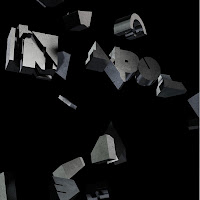
The other album was Interpol, by Interpol. Yeah, yeah, how many times have I mentioned that band here? The recording of their fourth album saw the departure of bassist Carlos Dengler, a key member of the group and throwing doubt on whether this was the end of the line for the band. Recruiting ex-Slint bassist Dave Pajo for live duties, the band appeared to have shrugged off any scepticism and refocussed.
Interpol is probably the band's most polished album yet. There's still the melancholy edge but there are brighter spots too, marking a progression of sorts. Some of the best tracks are the ones that start quietly and build toward epic crescendos – 'Lights' and 'Always Malaise' are the two critical cases in point, both consisting of layered elements which coalesce during the course of the song. Drummer Sam Fogarino makes his kit sound like a drum machine set to 'Krautrock motorik' setting and the piano sprinkles that crept into singer Paul Banks' solo album (as Julian Plenti) are liberally applied across the album. The brilliant single 'Barricades' is about as upbeat as this band is going to get, while other tracks court a punky ska vibe. I love it, but you'd have probably guessed as much.
Vinyl corner
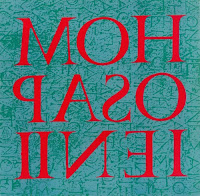
A business trip to Luxembourg City and a degree of free time meant I found my way to CD Buttek Beim Palais, a treasure trove of vinyl and CDs spread haphazardly across a scattergun array of genres. I bought a second-hand 7" of Pete Shelley's 'Homosapien II'.
A late-night conversation a few weeks ago with Steve, a colleague, reminded me of this track. I only had a Simple Minds version of this (remixed by Erasure's Vince Clarke), and that conversation reminded me I should try and track the original down.
Well, this isn't actually the original. 'Homosapien' was released in 1981 from the album of the same name by the Buzzcocks frontman. The BBC banned it for the same reason that Frankie was silenced a couple of years later (thus ensuring the single cult and popular success). This 1989 re-recorded second version is credited to Pete Shelley and Power, Wonder And Love and recasts the electronic original as a floor-filling dance track with decent techno sounds. It doesn't knit together terribly well on first listen, and initially I thought it was a Stock, Aitken and Waterman record (the fact that the initials of the collaborators forms PWL didn't help). The B-side, an instrumental version, is better and would have dropped neatly into DJ sets, though it is definitely of its time.
Then again, it's hard to get too disappointed when you've only spent €0.50.

Grinderman, for those familiar with Cave's work with his earliest band The Boys Next Door / The Birthday Party and, from 1984, The Bad Seeds, is intended to be more raw, less refined, less planned. Cave describes it himself as more 'fun'. I got into Nick Cave in 1993 when I saw him perform the seminal 'Red Right Hand' on Jools Holland; I'd been aware of him already through the NME's continual praise, but also because he was (and still is) signed to my favourite label, Mute. Up to that point I'd only heard a unrepresentative B-side on the Mute compilation International, and hearing 'Red Right Hand' encouraged me into his back catalogue. My good friend Neill and I saw The Bad Seeds live at Brixton in 2004 and it cemented my belief that Cave is indeed one of the best performers in the business. More reviews of The Bad Seeds, The Birthday Party etc can be found over at my Documentary Evidence site; the full review of Grinderman 2 can also be found there too. If you can't be bothered to read that, it would appeal to anyone with half an interest in loud, rough rock with a fuzzy edge.

The other album was Interpol, by Interpol. Yeah, yeah, how many times have I mentioned that band here? The recording of their fourth album saw the departure of bassist Carlos Dengler, a key member of the group and throwing doubt on whether this was the end of the line for the band. Recruiting ex-Slint bassist Dave Pajo for live duties, the band appeared to have shrugged off any scepticism and refocussed.
Interpol is probably the band's most polished album yet. There's still the melancholy edge but there are brighter spots too, marking a progression of sorts. Some of the best tracks are the ones that start quietly and build toward epic crescendos – 'Lights' and 'Always Malaise' are the two critical cases in point, both consisting of layered elements which coalesce during the course of the song. Drummer Sam Fogarino makes his kit sound like a drum machine set to 'Krautrock motorik' setting and the piano sprinkles that crept into singer Paul Banks' solo album (as Julian Plenti) are liberally applied across the album. The brilliant single 'Barricades' is about as upbeat as this band is going to get, while other tracks court a punky ska vibe. I love it, but you'd have probably guessed as much.
Vinyl corner

A business trip to Luxembourg City and a degree of free time meant I found my way to CD Buttek Beim Palais, a treasure trove of vinyl and CDs spread haphazardly across a scattergun array of genres. I bought a second-hand 7" of Pete Shelley's 'Homosapien II'.
A late-night conversation a few weeks ago with Steve, a colleague, reminded me of this track. I only had a Simple Minds version of this (remixed by Erasure's Vince Clarke), and that conversation reminded me I should try and track the original down.
Well, this isn't actually the original. 'Homosapien' was released in 1981 from the album of the same name by the Buzzcocks frontman. The BBC banned it for the same reason that Frankie was silenced a couple of years later (thus ensuring the single cult and popular success). This 1989 re-recorded second version is credited to Pete Shelley and Power, Wonder And Love and recasts the electronic original as a floor-filling dance track with decent techno sounds. It doesn't knit together terribly well on first listen, and initially I thought it was a Stock, Aitken and Waterman record (the fact that the initials of the collaborators forms PWL didn't help). The B-side, an instrumental version, is better and would have dropped neatly into DJ sets, though it is definitely of its time.
Then again, it's hard to get too disappointed when you've only spent €0.50.


