skip to main |
skip to sidebar
Go to: My Other Blog :: Documentary Evidence :: twitter.com/MJASmith
Earlier this week I took a listen to Poppy Nogood And The Phantom Band, a 1968 piece by esteemed and influential minimalist composer Terry Riley. Riley, a member of La Monte Young's Theatre Of Eternal Music, along with Marian Zazeela, Tony Conrad and a pre-Velvet Underground John Cale, left the dronescapes of the Theater in 1965 and carved out his own niche as a composer.

Poppy Nogood And The Phantom Band consists of five pieces, all segued together seamlessly into a single, evolving piece. Layers of arpeggiating horns and fat synth tones add colour to what is a shifting, deep soundscape that has similarities with In C (1964), Riley's most famous composition, but with perhaps less of that piece's abundant euphoria. Poppy Nogood And The Phantom Band is an altogether more atmospheric and menacing composition, occasionally brooding but intensely fast-paced in its shifting sounds.
From the minimalism of Riley to the dub-inflected sampleadelica of Renegade Soundwave. Renegade Soundwave first emerged from the dark depths of South London in the late 1980s, releasing tracks such as 'Biting My Nails' and 'Probably A Robbery', songs which were based heavily on borrowed sounds with a gritty, knowing savvy and occasional bursts of urban humour. Their first album, Soundclash dropped neatly into the late 80s love affair with the dancefloor; it was followed by a companion dub album which dumped some of the pop elements in favour of a raw edginess otherwise hidden under the surface of the parent album.

The latecoming follow-up, 1994's Howyoudoin? took the Soundclash ethic and added seriousness and guitars, producing the strummed guitar-dub classic 'Renegade Soundwave' as well as one of the most malevolent bad-trip tracks in 'Blast 'Em Out'. Howyoudoin? was also followed up with a dub companion, which again pared the tracks back and added new dimensions. After that, nada. Renegade Soundwave famously fell out with their label and despite a valedictory 2CD compilation, all but bit the dust. Gary Asquith from the band co-runs the label Le Coq Musique, and I'm hoping to interview him for Documentary Evidence soon.
McCoy Tyner's Tender Moments was released in 1967 on the Blue Note label, still the coolest jazz label in the world. Tyner is best known as the pianist in tenor saxophone legend John Coltrane's classic quartet (alongside Elvin Jones on drums, and Jimmy Garrison on bass), recording the watershed album A Love Supreme and Coltrane's sublime take on 'My Favourite Things'. Tender Moments might sound like a collection of mushy piano tinklings perfectly suited to the run-up to Valentine's Day, but it's anything but. This album is a fine collection of intense but accessible jazz workouts, interspersed with sprinklings of ruminative piano. 'Utopia', for example, has an cinematic grandeur that wouldn't sound out of place on Bernard Herrman's final work for the movie Taxi Driver. This album would serve as a suitable entry point for anyone looking to get into Sixties jazz but not yet patient enough to go all-out improv.
Go to: My Other Blog / twitter.com/mjasmith Last week was spent listening – mostly – to music that prompts recollections of events, people and situations.
The first was Possessed by the Balanescu Quartet. Possessed is effectively a collection of classical arrangements of Kraftwerk songs – ‘The Robots’, ‘The Model’, ‘Autobahn’ – and a handful of other arrangements, including ‘Hanging Upside-Down’ by David Byrne.
I saw the Balanescu Quartet perform live at the Patti Smith-curated Jimi Hendrix tribute, the last event to take place at the Royal Festival Hall on London’s South Bank before it closed for a swanky refit. They performed four classical adaptations of Hendrix tracks, their version of ‘Foxy Lady’ being the best of the bunch; they certainly providing an accessible counterpoint to other acts on the bill, chiefly Red Hot Chili Pepper bassist Flea who provided ten minutes of looping bass and trumpet that bore little relation to any of the Hendrix back catalogue.
Alexander Balanescu is not simply known for these arrangements of music from other genres; he is an accomplished composer whose scores have adorned film and television soundtracks, but Possessed is what it is – an accessible classical album, but one that fans of Kraftwerk can listen to comfortably, hearing the tracks almost as remixes rather than re-arrangements.
This album has a tragic poignancy for me. The first time I listened to this album was on the Underground. I was stuck on a train a few feet below the streets around Kings Cross, having just left the bright platforms of the Tube station. The train stopped and just sat there, sporadic announcements from the driver that we’d be sat there for a few minutes more and that we’d be on the move very soon.
Me, I couldn’t have cared less. I was enjoying the album and the delay simply meant that I’d be late for work, which at the time was no bad thing. In the end, the train pulled forward to a disused platform beneath Pentonville Road, whereupon we were evacuated up into the bright lights of the early morning. It was only at this point that the chaos, panic and devastation of that day, 7 July 2005, became evident. The album played on in my ears but I just wasn’t listening to it anymore.
Listening to Possessed this week was the first time I’ve attempted to listen to it since that day.
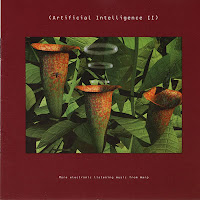
Another album prompting memories to resurface is Warp Record’s Artificial Intelligence II collection of ‘ambient’ electronica from the likes of Autechre, Cabaret Voltaire’s Richard H. Kirk, Speedy J and Link. It was the summer 1994 and I’d just been unceremoniously and unexpectedly dumped by a girl. I spent the afternoon laid up on my parents’ sofa listening, initially, to the Depeche Mode song ‘The Things You Said’ on repeat, the accusatory disappointment of that song perfectly matching my despondency. After ten or twelve listens I decided to put something else on; it was a close call between the embittered rage of Nine Inch Nail’s The Downward Spiral or the much more chilled Artificial Intelligence II compilation. The latter won the afternoon, leading me to a more logical and calm state of mind.
While we’re heading down musical memory lane, I downloaded Radio Musicola by Nik Kershaw this week, the Eighties doyen’s third album. I bought this on cassette from Cash Converters in Colchester in 1997, the day after my first Valentine’s Day ‘with’ my ex-girlfriend. For some reason, we’d decided to spend the evening apart. So I went out into Colchester with my housemates, drank too many Moscow Mules and, well, it didn’t end terribly advantageously. The next day, bleary-eyed, my friend Neil and I went into town late in the afternoon and bought a load of second hand tapes from Cash Converters, one of which was Radio Musicola. While not as good as Kershaw’s first two albums, it nevertheless remains a pop gem. But it definitely sounds better when you’re not hungover.

Some other things on my iPod this week – ‘Horchata’, the new song by Vampire Weekend which they have punted for free this week (verdict : more of the same, only with bigger production and strings); In Rainbows by Radiohead (not a fan of the band per se, and I’m glad I only paid a couple of quid for this when it was made available as a ‘pay what you like’ download, but it is good); and Howyoudoin? by dub-influenced Sarf Londoners Renegade Soundwave. I don’t know why, but I stuck that last album on my dad’s car stereo one Saturday afternoon on the way to pick up my mother and sister. He balked at the messy, sample-heavy songs, but I insisted on listening to it. He turned to me when we were sat waiting at a red light and said ‘I don’t think your mum would like this,’ as the apocalyptic bad-drug-experience (but never exactly precautionary) account detailed on ‘Blast ‘Em Out’ started its slow and edgy journey out of the speakers.


