Friday, 26 March 2010

Audio Journal : 22/03/2010

Go to: My Other Blog :: Documentary Evidence :: twitter.com/mjasmith

Julian Plenti's Julian Plenti Is ... Skyscraper has sat in my iTunes Wish-List since it was released last year, and I finally got around to buying it over the weekend. This was mostly prompted by listening to Interpol's Antics in the car all last week; from the paucity of Interpol music I thought it was high time to get Plenti's album; Plenti is a pseudonym for Interpol's vocalist Paul Banks. Given that one of the things that has always appealed about Interpol is Banks' Ian Curtis-esque delivery, expectations were pretty high for his first solo album under the Julian Plenti alias.
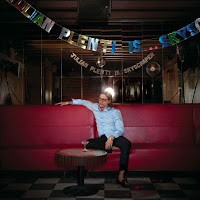
Julian Plenti 'Julian Plenti Is ... Skyscraper'

As is so often the case, approaching something with heightened expectations often leads to disappointment, and that's exactly how ... Skyscraper is. I truly hope that it will grow with repeated listening, but so far – three listens in – my conclusion is that it's a good album, but it's just nowhere close to Interpol at all. For one, it's far too optimistic; I've become used to the negativity and world-weary disenchantment across their three albums, and, well, this just isn't grumpy enough for my tastes. Secondly, like the good, but un-Strokes-y output of Albert Hammond Jr and Julian Casablancas, Banks's album has a totally different sound to anything his parent band have produced; I've never understood this. Does this imply a dissatisfaction on the part of a group member about the personal direction he or she wants to go in? Pondering aside, like I said, not a bad album, just not an Interpol album.

An album that I haven't listened for a good few years is Set Yourself On Fire (2004), the third album by Canadian band Stars. We bought this after Mrs S had heard the tracks 'Your Ex-Lover Is Dead' (how Morrissey is that?) and 'Reunion' on BBC 6 Music, but the album was a disappointment. The orchestral grandeur of 'Your Ex-Lover Is Dead' seemed to be a one-off, the rest of the album struggling to know what it wanted to be; there are tinkly keyboards, fey indie rock songs and the occasional burst of wistful violin. So I tend to avoid it when I'm scrolling through my playlists. But this week I was in one of those restless moods where I couldn't settle on anything in my iPod and decided to give it a listen. I was pleasantly surprised to see that it had grown on me, and whereas previously I'd got annoyed at the chopping and changing of styles, now it simply has a pleasing variety.

Stars 'Set Yourself On Fire'

Talented family patriarch Loudon Wainwright III released a new album this month. Songs For The New Depression is a collection of songs for guitar and ukele, the common theme of which is the poor state of the post-Lehman, post-Madoff, post-Bush US economy. So you get songs about the difficulties in the real estate market ('House'), cynical pieces about their car scrappage scheme ('Cash For Clunkers') and the track which neatly summarises the whole sorry affair, 'Times Is Hard'. It's a good, cynical album with Wainwright III's trademark wry humour, but it would have been nice to hear some of the songs delivered as full band pieces (as on Strange Weirdos or Recovery), but if you're a fan of solo folksy performances this won't disappoint.

Loudon Wainwright III 'Songs For The New Depression

Vinyl corner

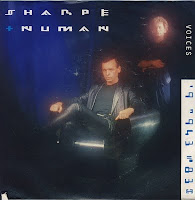
Bill Sharpe & Gary Numan 'No More Lies'

Okay, let's start with the sleeve of Bill Sharpe & Gary Numan's 'No More Lies' (1988) – it's awful, even by Eighties standards. Attempts at futuristic bleakness come across more like two leather-clad Village People in a gay bar than the look I suspect they were trying to cultivate. If it wasn't for the 'computer'-y font around the edge, you'd be mistaken for thinking this was some sort of hair-Metal record.

It's not. It's actually one of the better tracks in the entire, patchy Gary Numan back catalogue. Numan is someone who for me went off the boil after 'Cars' and the earlier work as Tubeway Army and I rid myself of my greatest hits CD many moons ago. The record box was spared, leaving the blue vinyl limited edition 7" and another track 'Your Fascination' (1985); in keeping with the 'weeding' I'm doing at present with my music collection, 'Your Fascination' (actually another good song come to think of it) was slung at a charity shop (the sleeve still bearing the price tag of the charity shop I bought it from years ago) and 'No More Lies' is on eBay.

'No More Lies' is a defiant, soulful Eighties pop track that could've been recorded just as well by Human League or even any of the Stock, Aitken & Waterman crop of singers. It's certainly not like any of the robotic synth pop Numan produced in his earlier years, nor does it provide any clues to his later, doom-laden electro-rock output. It's just a piece of breezy, polite pop music. The B-side, 'Voices' has a more muscular synth bass-line but mines a similar vein. As seems to be happening a lot lately, I found myself preferring the B-side to the lead track.

Follow me on Twitter.

Friday, 19 March 2010

Audio Journal : 15/03/2010

Go to: My Other Blog :: Documentary Evidence :: twitter.com/mjasmith

Orchestral Manoeuvres In The Dark, or OMD as they are more easily abbreviated to, are one of those bands that I remember distinctly from my childhood. Two of their tracks, 'Joan Of Arc' and the companion 'Maid Of Orleans' were on a cassette my dad had that we used to listen to in the car on Saturdays. Between those two tracks, seeing Gary Numan on the Old Grey Whistle Test driving a Sinclair C5, and watching a Soft Cell video (Non-Stop Exotic Video Show) you have probably the three biggest influences on my early musical tastes; no surprise that it would coalesce into a love for electronic music that endures to this very day.

OMD 'Architecture & Morality'

Those two tracks were taken from Architecture And Morality, OMD's 1981 album. I finally bought that album from RS McColl in Colchester while I was at University there in the mid Nineties along with some of the pre-Dare Human League albums. I love Architecture And Morality, especially the dystopian post-punk opener 'New Stone Age', but – sacrilegious though this must sound to 1981 purists – it doesn't do as much for me as their 1991 'comeback' album Sugar Tax. Again, my principal love for this album was from my dad playing the cassettes while we drove around Stratford-upon-Avon's boroughs and neighbouring villages on Saturday mornings. It's a glossy album that manages to deliver the stellar pop of 'Sailing On The Seven Seas', 'Pandora's Box' and 'Speed Of Light' but it also sees Andy McCluskey pay homage to his musical heroes Kraftwerk on the cover of 'Neon Lights' (Kraftwerk alleged quite happily that McCluskey nicked the melody for 'Electricity' from their 'Radio-Activity' but I don't hear it myself). Like the Pet Shop Boys with the orchestral stabs that dominated their early work, so too does the sampled choral harmonies that became an OMD staple dominate the sound of Sugar Tax.

OMD 'Sugar Tax'

I'm not too proud to admit that one of my favourite slushy films is Serendipity (2001), a 'rom com' about fate set in Manhattan starring Kate Beckinsale and John Cusack. In it, Beckinsale's fiance, the always annoying John Corbett (Lars) makes music effectively comprising his clarinet, drum 'n bass beats and sitars to create what jazzists would describe as 'fusion' but that I just call 'naff'; it goes without saying that his irritating character and the risible faux ethnology of the music is of course a convenient directorial vehicle for making the musician appear inferior to Cusack's own figure.

Loop Guru 'Amrita...'

The reason for mentioning this is because this week I stuck on Loop Guru's Amrita...All These And The Japanese Soup Warriors and was struck by the similarity to the music made by Corbett's character in Serendipity, and it was a comparison that I couldn't get out of my head whilst listening to Amrita... and which ultimately prompted me to turn it off. I loved the album at the time, Loop Guru being part of one of the infinite substrata of 1990s 'dance' music genres, and I saw them live in Colchester at a very memorable concert at the Arts Centre in 1995; but something now seems so horribly dated and inauthentic about the sound. 'Yayli' – the track which least tries to orient itself into this ethnic-techno genre – still sounds good, but the rest may find themselves in the deleted items folder fairly soon. I hate it when you go back through your music collection and feel dissatisfied with albums you haven't heard for ages.

Vinyl corner

Pavement 'Carrot Rope'

In the world of music, Pavement are regarded (along with, say, Sonic Youth or Dinosaur Jr.) as principal architects of an alternative sound which has influenced countless bands over the years. Even the musical magpie that is Damon Albarn cited the band as an influence for the patchy Blur album Blur (though I fail to hear anything but Blur therein). With a new compilation of their material just released, it's fair to assume that more people and bands will begin to be influenced by the band.

I own only one Pavement record, 1999's UK-only 'Carrot Rope' 7", which I've listened to more since recording it this week than I ever have since I bought it upon its release. It's a brilliant track, but – and I know this sounds superficial – I never want to put on the record because of the sleeve. Something about the peeling orange rope makes me feel nauseous, thus causing me to avoid it when I scour the box. Having overcome that reaction this week, I've been reminded of how much I love the jaunty, upbeat 'Carrot Rope', but also how much better the grandiose B-side ('And Then') is. I recall that at the time this came out I'd intended it to be the start of a proper immersion into the music of Pavement, which clearly never happened. Though I don't normally buy artist compilations, preferring instead to work my way through the albums sequentially, perhaps I should get that new 'best of'.

Follow me on Twitter.

Friday, 12 March 2010

Audio Journal : 08/03/2010

Go to: My Other Blog :: Documentary Evidence :: twitter.com/mjasmith

This week I've mostly been listening to Goldfrapp's 'Rocket', the first single to be taken from their new album Head First. A return to electronic pop after an experiment with Wicker Man-esque folksy mysticism on their last album (Seventh Tree), 'Rocket' takes the Eighties preset keyboard sound of Van Halen's 'Jump' and hitches it to a high-energy beat and a singalong chorus to create a perfect pop track which could easily grate after a few weeks of repeated listening.

Goldfrapp 'Rocket'

To stop that from happening I've also been listening to Wild Palms' '...Over...Time...' a single that was released on the Popular Music label last year. Wild Palms are a four-piece London band producing clipped, funky rock tracks with a whiff of Durutti Column, Devo or Talking Heads. A stellar cover of Bjork's 'Human Behaviour' is available for free download here.

Wild Palms '...Over...Time...'

At the weekend I watched the BBC Arena documentary on Brian Eno. Eno's 'Another Green World' is the title music for the BBC's long-running occasional high-brow arts documentary series, so it seems fitting that they would finally turn their attention to the enigmatic Eno and his wide-ranging interests. During the hour-long programme he spoke about his love of gospel music, choral music, Darwinism, art and science. I didn't get most of it, but it was fascinating to see Eno conjuring improvised ambient tracks effortlessly from his Mac.

Brian Eno

I have an enduring love for Eno's music, but actually own depressingly little of it. However, I do have a number of records produced by Eno for other artists – the aforementioned Devo and Talking Heads, plus Bowie, U2, the last Coldplay album and James. James are still most famous for their massive hit 'Sit Down'. At school, when 'Sit Down' arrived in the depths of the Madchester / Baggy scene, I couldn't have hated it more. Everyone was wearing those ubiquitous James 'flower' T-shirts and it all seemed so irritating. Perhaps it was just because I wasn't in with the cool kids.

A few years later, my friend Rachael played me Laid when it was released. The jangly, semi-acoustic Laid was produced by Eno, and I really loved it. I was, in truth, most attracted by the production credit, having spent the previous couple of years borrowing CDs from Stratford-upon-Avon Library's seemingly limitless collection of Eno albums. The follow-up to Laid, the now rare-as-hen's teeth Wah-Wah was even more up my street. Essentially a loose collection of jams recorded during the Laid sessions and re-processed into complete tracks by Eno, Wah-Wah was a departure for James but utterly in keeping with the Eno spirit. Whiplash, which followed also saw Eno helping out on curiously electronic-embracing James (the track 'Go To The Bank' is one of my favourite, out-of-character James tracks), while Millionaires (another Eno production) was a return to the stately Eno rock productions of The Joshua Tree and "Heroes".

James 'Gold Mother'

I really only fell for James big-style when I saw them perform three songs on Jools Holland to promote their Best Of compilation in 1999. They played 'She's A Star' and 'Runaground', both of which were overshadowed by the towering grandiosity of 'Sit Down', and after almost a decade of detesting that track I finally fell in love with it thanks in the most part to Tim Booth's vocals. This week I've listened to Gold Mother, which birthed 'Sit Down' to remind myself of just how good that song really is. A musician acquaintance once said to me that James tracks always have a plaintive, emotional quality because of the way their choruses use minor chords; I don't know if that's true, but 'Sit Down' now stands (or sits?) as one of my favourite tracks of all time to sing along badly to at high volume.

Vinyl corner

Space 'Magic Fly'

Space were a three-piece band from Marseille whose biggest hit was the instrumental 'Magic Fly' (1977), which I appropriated from my parents' music collection when I left home. Not to be confused with the band of Scouse reprobates who had hits in the Nineties with songs like 'Female Of The Species', this Space were exponents of a short-lived 'space disco' scene.

Led by the upper-octave monophonic synth melodies of Didier Marouani (also known as Ecama), along with bandmates Roland Romanelli and Jannick Top, 'Magic Fly' is essentially a Giorgio Moroder-esque high-energy disco track propelled by a thudding proto-techno beat. Sure, it's more Käse than Kraftwerk, but it's difficult not to like it. The B-side 'Ballad For Space Lovers' is more sedate and altogether more Prog-tastic.

Follow me on Twitter.

Friday, 5 March 2010

Audio Journal : 01/03/2010

Go to: My Other Blog :: Documentary Evidence :: twitter.com/mjasmith

Mrs S and I were sat in a hotel room a few weekends ago; she'd just bought an iPhone and was keen to show off what it could do. I initially held the iPhone with the same disregard as I did for the iPod, but I rapidly came round to appreciating that device and will no doubt feel the same way about her iPhone – in time – also.

We decided to watch some music TV, but the options on the hotel TV were limited to one (it was some trashy pop-only channel; these channels seem to spring up then die with alarming regularity, so even if I could remember what it was called, it probably wouldn't be there now). So we sat there, slack-jawed at just how crass modern pop music is and bemused at Craig David's comeback. And then came Jedward's cover of 'Under Pressure', replete with interjections from Vanilla Ice reprising his 'Ice Ice Baby' (which of course famously 'borrowed' the intro from the Queen / Bowie track). Awful though it clearly was, Jedward do thus have the dubious accolade of making Vanilla Ice, a terminally-derided white rapper from the early Nineties, look cool for perhaps the first time in his career.

Vanilla Ice 'Ice, Ice Baby'

So Mrs S and I got to talking about To The Extreme, Ice's 1990 album which we both owned on cassette. Such wistful recollections of our respective musical yesteryears are fairly commonplace between us. As an impressionable (yet tasteless) teenager I thought To The Extreme was brilliant and it was rarely out of my tapedeck, and in my head I thought I was as cool as my mate Rob's brother Chris, who was into Public Enemy. At the time I hadn't started reading the music press, nor had I started listening to 'underground' (i.e. credible) music, so I wasn't really able to see just how lame Ice was, and how mistaken I was.

Still, during the course of our chat about To The Extreme, we both said how – at the time – we thought the song 'Stop That Train' was infinitely better than 'Ice Ice Baby' (but then, it wouldn't have taken much). Before I knew it or could protest, Mrs S had launched iTunes and had purchased and seconds later was playing that song, and then in short order the Keith & Tex version of the song as well. No good can come from having portable access to near-instant music purchasing, I fear. Not only does it create the conditions for the inevitable capacity to overspend wantonly on ill-considered song purchases, but also it destroys any of that sense of anticipation that you used to get between buying a record and getting home to play it. However, without it we wouldn't have known about the Keith & Tex track, which is an outstanding piece of early, skanking Sixties rocksteady reggae. The Vanilla Ice song, on the other hand, was obviously always rubbish. Delete. Now.

Keith & Tex 'Stop That Train'

From music TV to radio, specifically to the plight faced by BBC 6Music, which may face closure as part of a wave of proposed cuts at the national broadcaster. 6Music remains the only non-commercial station to broadcast music which can be broadly classified as 'alternative'. Imagine the sorely-missed John Peel presenting his eclectic mix of old, new, archive performances / sessions, the forgotten and the 'classic', twenty-four hours a day, seven days a week, and you get the picture as to what this specialist broadcaster is all about.

BBC 6Music

Some of the things I've written about in this blog have reached my ears because of the exposure that non-pop music receives on 6Music. Without the station, there really is little alternative for anyone truly passionate about the music that is not acknowledged by Radios 1 and 2, leaving us with little more than Zane Lowe's brief weekday slot filled in the wake of Peel to satisfy curious ears. To lose 6Music from the BBC portfolio would be an absolute travesty for music fans. To act, do one or better still all of the following:

1. Take a listen at:

http://www.bbc.co.uk/iplayer/playlive/bbc_6music/

1. Join the Facebook group at:

http://bit.ly/bbc6music

2. Sign the online consultation at:

http://bit.ly/srconsultation

3. Tweet with the hashtag #savebbc6music

Vinyl corner

The JAMs 'It's Grim Up North'

Last week I said I'd resurrect my practice of digging out an old record from one of the boxes hidden away in the darkest corners of my house.

This week's slice of vinyl comes from The JAMs, aka The Justified Ancients Of Mu-Mu, aka The KLF. The anarcho-techno duo of Bill Drummond and Jimmy Cauty of course produced some brilliant dancefloor records with the trio of 'What Time Is Love?', '3AM Eternal' and a remixed 'Last Train To Trancentral', perfect club hits interspersed with faux cult mythology. They also appeared on Top Of The Pops with Gary Glitter back when they went under the name The Timelords, performing an early example of the mash-up genre with their blending of their 'Doctorin' The Tardis' with the now-deposed Glitter's 'Rock N' Roll'. The KLF quickly descended into artistic dubiousness – machine guns and dead sheep at The Brits, heavy metal re-versions of their biggest hits, burning a million quid on the Isle of Jura, not to mention a questionable duet with Tammy Wynette – but we should never forget that one of their earliest 'releases' as The KLF was a book, published in the wake of 'Doctorin' The Tardis' hitting the top spot of the UK charts, called The Manual: How To Have A Number One The Easy Way, a book whose opening fragment of advice to budding popstars is 'Firstly, you must be skint and on the dole'.

So, not a band to be taken especially seriously then and on one hand 'It's Grim Up North' continues the theme. Basically a list of Northern English towns and cities spoken through a megaphone over a thudding 'What Time Is Love?' acid house track, occasionally punctured by the distorted 'chorus' of 'It's grim up north', it's classic KLF and pointed to a future where they'd ditched some of their more wayward tendencies in favour of a return to the dancefloor; the album that this was purportedly taken from (The Black Room) has become the stuff of legend and has never, and probably will never, see the light of day.

If the A-side ('It's Grim Up North (Part 1)') is still a bit pranksterish for you, or you don't like the grandiose orchestral conclusion, a straightahead techno dub can be found lurking menacingly on the B-side.

Follow me on Twitter.

Thursday, 25 February 2010

Audio Journal by MJA Smith : 22/02/2010

Go to: My Other Blog :: Documentary Evidence :: twitter.com/mjasmith

We watched the movie Once (2006) at the weekend. A modern-day musical set in Dublin, it presents a week in the lives of the un-named lead guy (Glen Hansard from Irish band The Frames) and girl (Marketa Irglova). Hansard is a hoover repair man writing folksy songs and busking in his spare time while trying to get over a break-up. Irglova is an Eastern European immigrant who happens to be an exceptional pianist. After a chance encounter and over the course of the ensuing week she instils a level of faith and confidence in Hansard's songs, adding piano and direction to his songs, and ultimately encouraging him to recruit a band of fellow street musicians and to take a small loan to finance a weekend recording session. It's a simple, yet highly effective film; more of a documentary or extended music video, and is principally a vehicle for Hansard's emotionally fraught songs which are somewhere between the frailty of Damien Rice, the depth of Talk Talk's Mark Hollis and the rapturous peaks of Arcade Fire's Win Butler. Irglova on the other hand has a fragile, delicate voice best heard on the classically-informed ballads she performs here.

Once soundtrack sleeve

I don't think I've ever downloaded the soundtrack to a movie while I've still been watching it, but such is the pull of songs like 'When Your Mind's Made Up' and 'Lies', songs filled with disappointment, negativity and an emotional depth that's hard not to warm to absolutely. Hansard also lightens the mood with the wry Loudon Wainwright III-esque 'Broken Hearted Hoover Fixer Sucker Guy' and the lo-fi synth pop piece 'Fallen From The Sky'. Great movie, great soundtrack.

While our two daughters were eating dinner at the weekend, and desperate for a break from The Wiggles on constant repeat, I grabbed the only iPod which was handy, which happened to be Mrs S's. Doing this always fills me with dread as it's in major need of a tidy-up, and also my music collection is significantly under-represented therein. So I stuck on Phil Spector's Sounds Spectacular (1974) compilation, which I recorded from my parents' vinyl copy. The songs are obviously familiar from any other Wall Of Sound compilation, as is the distinctive Spector sound, but we noticed that the transfer from vinyl gave the songs a much richer warmth and authenticity more befitting the songs than the comparatively clinical re-masters on the infinitely more expensive Back To Mono boxset. An obvious point to vinyl aficionados, I know, but one which struck me unexpectedly in that moment. And that reminded me that time was when I used to mine the Smith record boxes each week to turn up some long forgotten vinyl purchase to write about in this blog; I must start doing that again.

Phil Spector 'Sounds Spectacular' sleeve

On a rare tentative visit to my least favourite music shop, HMV, at the weekend, I was suckered into one of their periodic 'two for a tenner' deals on CDs, and walked away with Bad Lieutenant's Never Cry Another Tear. Bad Lieutenant is a three-piece band consisting of sometime New Order guitarist Phil Cunningham, Jake Evans and New Order / Joy Division / Electronic front-man Bernard Sumner.

Bad Lieutenant 'Never Cry Another Tear' sleeve

A sticker attached to the shrinkwrap proclaimed that 'this sounds more vital than anything New Order have done since 'Crystal'', which irked me somewhat. 'Crystal', undeniably a great track, was on New Order's penultimate album so in terms of making out that this is a return to some sort of classic period New Order sound the scope seems torridly short-sighted in its range. Typical NME.

Still, what is correct is that Never Cry Another Tear is brilliant. More akin to the second two Electronic albums (Raise The Pressure and Twisted Tenderness), with plenty of acoustic guitars and genteel lyrics, the album also finds time to throw in Power, Corruption And Lies-era synths on a few of the faster-paced songs. Sumner shares vocal duties with Evans while Stephen Morris adds drums to a couple of tracks, and Blur's Alex James drops in on bass duties occasionally. The album was released back in October of last year, and I'm annoyed with myself for not buying it sooner, especially since it's reminded me just how much I love Sumner's voice.

Follow me on Twitter.

Friday, 19 February 2010

Audio Journal by MJA Smith : 15/02/2010

Go to: My Other Blog :: Documentary Evidence :: twitter.com/mjasmith

While tidying up the office, I came across a single by a band called Nemo from 2003 entitled 'Piccadilly In Sepia'. Nemo, which does sadly rank (in a post-Disney sense) as among the worst band names of all time, developed out of another band (Spectacle), some of whose members Mrs S went to school with. The lead track is a precise slice of authentic electronic pop that could have been released anytime between now and 1984, its chorus of 'Piccadilly in sepia / We are naked on the underground' containing the sort of Nitzschean attempts at seriousness that littered a number of classic 80s tracks, although the idea of us all being starkers on the Tube is somewhat disturbing. For all its lyrical faults, 'Piccadilly In Sepia' is a brilliant, brilliant and sadly overlooked synth pop gem.

I caught the DLR into the City at the weekend. The driver-less trains always remind me of the track by Komputer 'Looking Down On London'. Komputer, a duo of Simon Leonard and David Baker were formed out of the anarchic electronica act Fortran 5, ditching the amusing Orb-esque samples in favour of Kraftwerk synth purity. In doing so they headed back to their roots as synth duo I Start Counting, whose two albums (Fused and My Translucent Hands) were underground classics. If you sign up to Komputer's mailing list, you get a free mini-LP to download (Intercom), containing five tracks of icy, retro electronica.

Komputer 'Looking Down On London'

If Komputer, in adopting Kraftwerk's electronic template, are retro in their aspirations, Raymond Scott's music could be described as pre-retro and authentically pioneering. Scott, who was variously a classical and jazz musician, moved into electronic composition and synth module development with his Manhattan Research, Inc. enterprise in 1946. In the process he developed new instruments which would go on to inspire the likes of Bob Moog to develop their own, genre-defining synth kits.


Arriving at a time when electronic composition was primarily the domain of scientist egg-heads and Hollywood sound effects departments, Scott's diverse synthetic palette found an ideal home as the backdrop for futuristic TV and radio spots in the 1950s and 60s; a compilation of some of these commercials and other Scott pieces was released as Manhattan Research, Inc. by Basta in 2000. Scrape your way past any kitsch connotations from the use of spoken sales pitches for bygone products and visions of a wonky future from the likes of the Bendix Corporation, and what you're left with is sixty-nine tracks of elaborate electronica that directly prefaces today's pop flirtation with synthetic sounds.

Raymond Scott 'Manhattan Research, Inc.'

Follow me on Twitter.

Thursday, 4 February 2010

Audio Journal by MJA Smith : 08/02/2010

Go to: My Other Blog :: Documentary Evidence :: twitter.com/MJASmith

Earlier this week I took a listen to Poppy Nogood And The Phantom Band, a 1968 piece by esteemed and influential minimalist composer Terry Riley. Riley, a member of La Monte Young's Theatre Of Eternal Music, along with Marian Zazeela, Tony Conrad and a pre-Velvet Underground John Cale, left the dronescapes of the Theater in 1965 and carved out his own niche as a composer.


Terry Riley 'Poppy Nogood And The Phantom Band' sleeve image

Poppy Nogood And The Phantom Band consists of five pieces, all segued together seamlessly into a single, evolving piece. Layers of arpeggiating horns and fat synth tones add colour to what is a shifting, deep soundscape that has similarities with In C (1964), Riley's most famous composition, but with perhaps less of that piece's abundant euphoria. Poppy Nogood And The Phantom Band is an altogether more atmospheric and menacing composition, occasionally brooding but intensely fast-paced in its shifting sounds.

From the minimalism of Riley to the dub-inflected sampleadelica of Renegade Soundwave. Renegade Soundwave first emerged from the dark depths of South London in the late 1980s, releasing tracks such as 'Biting My Nails' and 'Probably A Robbery', songs which were based heavily on borrowed sounds with a gritty, knowing savvy and occasional bursts of urban humour. Their first album, Soundclash dropped neatly into the late 80s love affair with the dancefloor; it was followed by a companion dub album which dumped some of the pop elements in favour of a raw edginess otherwise hidden under the surface of the parent album.

Renegade Soundwave 'Howyoudoin'' sleeve image

The latecoming follow-up, 1994's Howyoudoin? took the Soundclash ethic and added seriousness and guitars, producing the strummed guitar-dub classic 'Renegade Soundwave' as well as one of the most malevolent bad-trip tracks in 'Blast 'Em Out'. Howyoudoin? was also followed up with a dub companion, which again pared the tracks back and added new dimensions. After that, nada. Renegade Soundwave famously fell out with their label and despite a valedictory 2CD compilation, all but bit the dust. Gary Asquith from the band co-runs the label Le Coq Musique, and I'm hoping to interview him for Documentary Evidence soon.

McCoy Tyner's Tender Moments was released in 1967 on the Blue Note label, still the coolest jazz label in the world. Tyner is best known as the pianist in tenor saxophone legend John Coltrane's classic quartet (alongside Elvin Jones on drums, and Jimmy Garrison on bass), recording the watershed album A Love Supreme and Coltrane's sublime take on 'My Favourite Things'. Tender Moments might sound like a collection of mushy piano tinklings perfectly suited to the run-up to Valentine's Day, but it's anything but. This album is a fine collection of intense but accessible jazz workouts, interspersed with sprinklings of ruminative piano. 'Utopia', for example, has an cinematic grandeur that wouldn't sound out of place on Bernard Herrman's final work for the movie Taxi Driver. This album would serve as a suitable entry point for anyone looking to get into Sixties jazz but not yet patient enough to go all-out improv.

McCoy Tyner 'Tender Moments' sleeve image

Follow me on Twitter.