Saturday, 12 June 2010

Audio Journal : 07/06/2010


Last year I offered a brief review of Alistair Crosbie's The Last Days Of Summer, describing it as being 'quite honestly one of the most serenely beautiful pieces of music I've ever heard. Constructed entirely of heavily-processed layers of guitars recalling Robert Fripp's Soundscapes series or Stars Of The Lid, the track approaches a kind of icy classicism whilst maintaining an air of ethereal stasis. Anyone interested in hearing how guitars can be made to sound is urged to get their ears around this release.' High praise indeed.

This week I completed a major interview with Crosbie, an experimental musician based in Glasgow, whose works are released as CD-Rs in beautiful, hand-made sleeves, via his own Lefthand Pressings imprint.

In April, Crosbie released no less than four new albums – musicforawakening, Scarlett Dies, All Suns Must Set (Prelude To Wanderlight Falls) and a collection of previously unreleased works melded together across two discs, Cinders. The music contained in these four hand-crafted and beautifully-packaged releases range from the ethereal and uplifting processed guitar of Scarlett Dies, the deep bass tones of All Suns Must Set, to the eclectic Cinders, containing fragments of everything from icy piano works to spoken word passages to poetry to pulsing electronica.

The interview can be found over at my Documentary Evidence website. Some excerpts of Crosbie's work, as well as some exclusive downloads can be found at his Bandcamp page.

Wednesday, 2 June 2010

Audio Journal : 31/05/2010

Work from home playlist

Two unusual things about today – one, I worked from home and two, I had the house to myself. Here was today's work from home playlist, three albums selected at random to help me concentrate and be more productive.

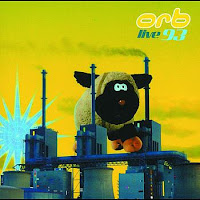
The Orb Live '93

The Orb 'Live '93'

I first got into The Orb about a year after they released U.F.Orb. Before that I didn't really get the point of ambient music and I also thought The Orb in particular were just a huge joke. Their 'performance' of a hugely compressed single version of 'Blue Room' on Top Of The Pops saw the duo of Dr. Alex Paterson and Kris 'Thrash' Weston sitting either side of a chess board bathed in blue light, and I just didn't get it. Later I realised that there was humour inherent in their chill out music – that's what happens when you work with Jimmy Cauty from The KLF – but it wasn't meant to be a joke.

By 1993 however, I'd just finished my GCSEs, a lot of family stuff was kicking off, mild teenage angst was developing and I needed to find some way of calming down. U.F.Orb was the antidote. I bought it on cassette the day before my father went into hospital for an operation, and spent the entire length of his op sat in the family car listening to the album. It spawned an ongoing love of textural ambient music, but nothing – even some of The Orb's later output – ever came close to hearing that album for the first time.

The only thing that topped that album was seeing The Orb live at Warwick Arts Centre in 1995 with a school friend. It was an incredible evening, though possibly not as incredible as the people stoned out of their nuts found it. I genuinely regarded that concert as my musical coming of age, much more affecting in many ways than any of the usual landmark life events that ensued.

The problem is that I don't remember much about that night beyond the fact that in the post-concert DJ set I shook Dr. Alex Paterson's hand and gave him a massive thumbs up. The closest I can get is this 1993 live compilation which draws together tracks from various performances, including a seminal 'Tower Of Dub' – ex-PiL bassist Jah Wobble's low-slung dub rhythm pushed to levels that I recollect when played 'live' (by way of a sampled loop) back at Warwick Arts Centre made me think my chest was going to cave in.

Aphex Twin Selected Ambient Works 85 – 92
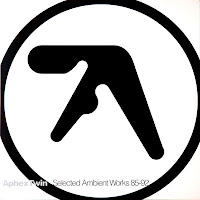
Aphex Twin 'Selected Ambient Works 85 - 92'

Hooked on ambient music as I became in 1993 after purchasing U.F.Orb, it didn't take long before this album fell into my mits. Aphex Twin, by the time of this collection on the Belgian R&S label, was already established as a electronica enigma, a musical auteur who claimed not to have heard any of the music that his music was compared to; he made music in his shed, in Cornwall which at the time wasn't exactly regarded as a techno centre.

Richard D James, Aphex's given name, had a particularly unique take on the ambient genre. In few cases on Selected Ambient Works do you find the wispy, pulsing electronica which characterised vast swathes of this particular substrata of electronic music. Instead you get heavily reverb-ed slowed-down 'ardcore beats, icy synth lines and Willy Wonka samples. It prefaces the Warp label's fascination with clanging distorted beats and provides the bridge between the likes of Autechre with the industrial music of Cabaret Voltaire; not that James would have claimed to have consciously known this.

Warp released Selected Ambient Works II a few years later; it had no track names, just images reflecting each of the tracks. I borrowed it from the library the same day as I borrowed Brian Eno's The Shutov Assembly. I remember thinking that both albums sounded pretty much the same.

David Bowie Christiane F. - Wir Kinder vom Bahnhof Zoo

David Bowie 'Christiane F. - Wir Kinder vom Bahnhof Zoo

I had never considered buying Bowie until I read Christopher Sandford's Loving The Alien biography at University in the mid-Nineties. I don't think I've ever elected to read about an artist before actually having any of their music, but something about the book in the campus's branch of Waterstone's caught my eye and I decided I'd give it a go.

What emerged was an attraction to Bowie's 'Berlin' period – the trio of albums Low, Heroes and Lodger – which were produced by Bowie and Eno while the erstwhile David Jones was a resident in the city. I think it was an interest in Berlin as a cultural influence, and the influence of Low on Joy Division, more so than Eno's engagement, that hooked me in to that trio of albums. I bought the trio of albums over a period of a couple of years after reading that book and initially found them confusing, challenging listening experiences. In a bizarre way I didn't feel like I was entitled to listen to Bowie; I didn't understand his vernacular.

Since then I've moved either side of the Berlin period, specifically the Velvets-influenced Ziggy albums, but it's to the Berlin albums that I always return. This soundtrack album effectively works as a greatest hits of the period, drawing together album tracks and sundry oddities; the best of these is '“Helden”', a German version of the mighty '”Heroes”', in my opinion one of the most uplifting songs ever recorded.

Friday, 28 May 2010

Audio Journal : 24/05/2010

Okay, okay. So I said that this week I'd be posting my interview with Glasgow-based experimental musician Alistair Crosbie. I lied.

Instead, I've completed an interview with Phil Costello, vocalist and guitarist in metal band Diamondsnake. Diamondsnake is the brainchild of electronic musician Moby and the aforementioned Costello, and I've been an ardent Moby fan since he released the 'Move' EP in 1993.

Moby 'Move'

If you've bought the 2006 Moby compilation Go - The Very Best Of Moby, you'll know that Moby is an artist fond of jumping musical genres at will. Most people are familiar with his work on the hugely successul album Play, which blended gospel samples with hip-hop beats, but few will remember the thrash-punk album that came before, Animal Rights. Although best known as an Christian-vegan electronic musician, Moby has also produced material for Guns n' Roses and Ozzy Osborne, and first dabbled in music with the hardcore band Vatican Commandos.

Anyway, enough of the preamble. I was lucky enough to secure this interview with Costello for my Documentary Evidence website. Click here to read it. And to download free Diamondsnake tracks from Facebook, click here.

Diamondsnake

Wednesday, 19 May 2010

Audio Journal : 19/05/2010

'National Trust - The Album'

Pulp's Jarvis Cocker has produced an album for The National Trust, the UK charity responsible for the ongoing ownership and upkeep of a number of properties, areas of conservation land and sites of significant historical importance.

The album consists of 'environmental sounds' recorded at NT properties and sequenced together into a single, seamless atmospheric work. With the exception of a few – clocks at Bickling Hall, a strap press at Patterson's Spade Mill, an old music box at Lanhydrock – there are few opportunities to directly tie the sounds recorded to the locations and properties specified, even if you were a frequent visitor there. Instead you just need to trust that they are genuine recordings, not sounds lifted off the albums of sound FX and environmental atmospheres the BBC and others used to release in more antediluvian times.

Whilst it's a very serene, very English album, with the exception of 'Quarry Bank Mill - Murmurs Of Children In School House', you'd be mistaken for thinking that all NT properties are always so quiet and serene – clearly the atmospheres would have been very different if they'd recorded the clamour that can be frequently heard in NT cafés or gift shops. You'd be very lucky indeed to be able to experience some of these locations without the near complete intrusion of people.

Personally, I found the collection cloying rather than calming; perhaps this is the danger of listening to this on a busy commuter train into London. I found the almost industrial sounding clamour of the strap press (whatever that is; part of me doesn't want to know) generally more appealing, reminding me of an organic Neubauten.

As for Cocker's involvement, that's debatable. Apparently he selected the sounds. I would never, ever go so far as to say that it was, by attaching a well known personality to this project, a cynical ploy to drive people from outside the NT's core demographic to their website. Or have I just done that? Cynicism aside, I'm a National Trust member and am supportive of pretty much anything they do to protect significant aspects of the British national heritage.

Download the album and listen to individual atmospheres here.

All images (c) National Trust

Monday, 17 May 2010

Audio Journal : 17/05/2010

I have spent most of the last week listening to the four beautiful new releases by Glaswegian experimental musician Alistair Crosbie. Alistair and I have been trading emails this week as part of an interview to accompany my reviews next week.

Where I haven't been listening to ethereal guitar works, I've been catching up on downloaded (legally) odds and ends that have been sat on my hard-drive for a while but just haven't made it into my iPod. Here's ten.

Interpol

Interpol 'Lights' - stellar new track from the NYC's band upcoming fourth album. Expect more maudlin, Joy Division-esque tracks on the new LP.

Nels Cline 'Floored' - excellent jazz guitar track from the esteemed solo artist and sometime Wilco guitarist Cline, taken from new album Initiate.

LCD Soundsystem 'Drunk Girls'

LCD Soundsystem 'Drunk Girls (Holy Ghost! Remix)' - inappropriately, James Murphy's new single is one of my four-year-old Daughter#1's favourite songs of the moment, here given a shiny electronic respray by the consistently excellent Holy Ghost!

Cold Cave 'Life Magazine (Arthur Baker Remix)' - electro pioneer Arthur Baker gives band-du-jour Cold Cave an extended fuzzy dance workout, occasionally reminding you of his classic work with Freeez and New Order.

The Ponys 'Deathbed + 4'

The Ponys 'Check The Door' - from Deathbed + 4, this is a gloomy piece of stentorian bluesy shoegazer rock, with some neat, slow-motion Fifties rock 'n roll riffery toward the end and a vocalist who pays a debt to Blancmange's Neil Arthur.

Goldfrapp 'Rocket (Richard X One Zero Remix)' - for a limited time sometime Sugababes producer Richard X's mix was available as a free Amazon download. The original track was sublime electronic disco-pop, which is given an inoffensive dancefloor reboot here.

Martin Küchen / Keith Rowe / Seymour Wright 'Leeds Extract' - a ten-minute extract from a trio improvisation recorded in Leeds, centred around reductive electronics and an inventive plethora of scratchy sounds. Check the Another Timbre website for more improv extracts from their back catalogue.

Andy Weatherall 'Walk Of Shame' - taken from A Pox On The Pioneers, legendary producer Weatherall's first album under his own name, this blends pleasant tinkly electronics with a subtle dub bass line and guitar reminiscent of the late Michael Karoli from Can.

Conor Oberst

Conor Oberst And The Mystic Valley Band 'Nikorette' - the new post-Bright Eyes country-rock band from Oberst evidences a more mainstream sound not a million miles from Ryan Adams And The Cardinals.

MGMT 'Destrokk' - an early cut from the Brooklyn duo taken from the Time To Dream EP which owes a debt to Suicide with its harsh motorik synth grind sound; a style which couldn't be further from their recent 'space opera', Congratulations.

Vinyl Corner

Secret Knowledge '2 Much Of Nuttin''

Secret Knowledge '2 Much Of Nuttin'' (Heavenly 7", 1994)

I never really liked this track when it was released, principally because I never found Kris Needs' approach to remixing (for the likes of Primal Scream or Nitzer Ebb) terribly thrilling. I'm honestly not sure why I even bought this.

This is an attempt to produce a sort of pop digital heavy dub, but sadly lacks any of the sonic depth of either original Jamaican dub a la King Tubby, or other digital protagonists like Mad Professor. The instrumental version on the B-side loses the annoying female vocals, and is mildly diverting.

Sunday, 9 May 2010

Audio Journal : 10/05/2010

There is something maddeningly anthemic about the songs of James; even when Tim Booth is singing about some perplexing metaphor such as porcupines (as he does on the band's new EP, The Night Before) or something really mundane, the result is the kind of song it's difficult not to feel an emotional connection to. I've had it explained to me before, and I've probably misquoted it here before and so I won't attempt to do so again, but there is an undeniable quality to the James catalogue – consistently so – sufficient to imagine yourself singing along loudly and rapturously at their concerts almost unprompted. Well, that's what I think anyway.

James 'The Night Before'

Consequently, it's quite hard to find anything new to say about The Night Before, beyond the fact that it's eight tracks of the usual high quality James fare. That shouldn't be read as 'more of the same', but it's meant that despite middle-age, break-ups and a complete redefinition of the 'indie' world they grew from (check the song 'All My Letters' for a neat backwards look), James's quality remains undiminished. And I can only thank them for that. Download it now at iTunes.

Television's Marquee Moon is one of those NYC watershed albums from a band that defined the nascent CBGBs / US punk scene. However, even CBGB head honcho Hilly Kristal didn't really consider Television to be 'punk'. Marquee Moon isn't the snarling, amphetamine-driven speed-rock that its labelling as a punk album would have you believe; it's undeniably 'alternative' to much of the Seventies rock dross, but couldn't be compared to say, The Ramones, who fit more neatly into what we think punk should sound like. US punk was, however, about a way of thinking, an attitude, and much more artistic than its drooling, seething UK sibling. For a start, Marquee Moon has riffs (and often long ones at that), something that UK punk had eschewed in the wake of Prog excess. Television were thus dubbed 'art rock'.

Television 'Adventure'

Adventure (1978) is harder to slot into the art rock strand of US punk; in contrast to the more edgy, nervous elements of Marquee Moon, Adventure is positively MOR in its leanings. There is also a strong strain of country in some of the sliding guitar passages. (Perversely this would have probably been more appealing to Hilly Kristal, who originally set up CBGBs for country and bluegrass acts.) That's not to say it's a bad or even dull album; it just takes a few listens to understand it in the wake of exposure to Marquee Moon.

I've been watching the new BBC series, I'm In A Rock 'N Roll Band, whose first episode featured the magnetic role of the band's singer. The programme was actually pretty good, compared to those turgid Channel 4 chart-format rundowns; you know the drill, 50 Greatest Albums or 50 Greatest Boybands (are there 50? Are any deserving of the adjective 'great'?) The talking heads interviewed also weren't your usual fare – no David Quantick or Paul Morley here – and a very likeable Iggy Pop spoke at length about his almost compulsive need to crowd-surf. His recent gigs with The Stooges, performing the Bowie-produced Raw Power, have met with considerable acclaim, and the combination of the two – the programme and the gig reports – have made me think that it's high time I reappraised Iggy.

The Stooges 'The Stooges'

So this week I took a listen to The Stooges, their debut album from 1969 which was produced by ex-Velvet Underground man John Cale. I've listened to it many, many times but generally get bored after 'I Wanna Be Your Dog' and consequently I don't really know half of the album. I appreciate this might sound like heresy, especially as The Stooges were an important step in the genesis of NYC punk and a big influence on its UK sibling also. All I'll say is that I'm sorry I ever stopped listening to it. It's a work of considerable, assured genius, especially 'We Will Fall' – a song I detested before – which has a classic Cale viola drone, and almost raga vibe. It's also reminded me that it's high time I got round to buying The Idiot and the aforementioned Raw Power.

Vinyl Corner

Human League '(Keep Feeling) Fascination'

Human League '(Keep Feeling) Fascination' (Virgin 7", 1983)

I've said here before that I like early, pre-Dare Human League; I also have Dare (doesn't everyone?) and one of their more recent albums, the brilliant Secrets. However I don't have the album from which this cheerful, soulful, Fairlight horn-deploying track was taken, as it wasn't actually on an album. If I had to rank my favourite League tracks, suffice to say it wouldn't be anywhere close to the top. It doesn't help that my copy of this was rather warped, making those horns sound queasy and unpleasant to listen to.

The B-side, 'Total Panic', once again wins the day. It's an instrumental, which side-steps any issues I have with the Oakey / Catherall / Sulley vocal trio, and contains some nice phased synths. I'm not sure necessarily that it lives up to the scenes evoked in the title, but as a small synth-pop vignette it's actually quite good.

As for the absolutely awful sleeve...

Wednesday, 5 May 2010

Audio Journal : 03/05/2010

Two albums in one week from two of your favourite artists is a rare treat, but so it was in April with Rufus Wainwright's All Days Are Nights: Songs For Lulu and David Byrne's collaboration with Fatboy Slim (and just about every female vocalist under the sun) on Here Lies Love.

Both albums, coincidentally, are 'tributes' of sorts to women. In Wainwright's case that woman is a character played by actress Louise Brooks in the 1929 movie Pandora's Box, but also serves as a tribute of sorts to his mother, the late Kate McGarrigle, who passed away at the start of this year; whereas Byrne's album depicts the life of shoe-addicted dictator's wife, Imelda Marcos and juxtaposes that with the life of Estrella Cumpas, the woman who raised her.

Rufus Wainwright 'All Days Are Nights: Songs For Lulu'

Both also have their origins in theatre. Byrne's project with Fatboy Slim was originally conceived as a performance (albeit in nightclubs), while Wainwright's recent opera success with Prima Donna and love of all things Wagner has informed much of his work; the live performance of All Days Are Nights I went to on 13 April at Sadler's Wells saw Wainwright performing the entire album, almost faultlessly, in a 17ft ball-gown as a song cycle with the express request to the audience not to applaud until he had left the stage; theatrical indeed. As an album, All Days Are Nights sits neatly into Wainwright's opera-inspired oeuvre, and despite being just the man and a piano, is his most dramatic album to date. Mrs S says it's dreary, and at times it is certainly more plaintive and reflective than previous albums (check out the takes on three Shakespeare sonnets), but it is also by subtle shades uplifting and humorous (as on the most upbeat piece 'Give Me What I Want And Give It To Me Now' or the positively euphoric start to 'The Dream'). My personal favourites are the opener, 'Who Are You New York?', a ruminative long song to the City itself, and 'Martha', a song whose lyrics comprise the answer machine messages left by Rufus to his sister while their mother's illness worsened; it also signals the recent tentative reconciliation, through grief, of Rufus and his father Loudon.

Rufus Wainwright at Sadlers Wells, 13 April 2010

Perhaps not as instantly, and bombastically accessible as previous Wainwright fare, All Days Are Nights is probably the most authentic, personal album Wainwright has produced thus far. Previous albums have always featured pieces for piano only, and in the live setting are always firm favourites with the audience (especially when Wainwright messes up, plays the wrong section or ad libs theatrically – think of an extremely camp Les Dawson); in an odd sense, the scaling back of the instruments to just a solitary piano ties in neatly with the reconciliation with his father, who has made it his business to produce album after album of music consisting of just his voice and a guitar.

David Byrne and Rufus Wainwright have worked together once before on a song, and that song was also theatrical in origin. 'Au Fond Du Temple Saint' appeared on Byrne's 2004 album Grown Backwards. The former Talking Heads front man's voice may have not been perfectly matched to Wainwright's dexterity on this piece from Bizet's Les Pêcheurs de Perles but all I wanted was a segue in this blog from one album to the other, and that seemed to work. Plus, more earnestly, the idea of Byrne tackling an opera track would – when watching the videos for 'Road To Nowhere' or 'Once In A Lifetime' – have seemed nonsensical; however, Byrne was an art student before starting Talking Heads and his interest in all manner of art forms is manifest (check his blog for the proof). And so I stand by my segue. The other possible one would have been Martha Wainwright, who is one of the female vocalists employed by Byrne on this project.

David Byrne and Fatboy Slim 'Here Lies Love'

Of this album, critics have dubbed it the most accessible David Byrne album he's produced since the Talking Heads days, thanks to the input of Fatboy Slim, but I'd disagree; yes, it's more obviously 'pop' than other Byrne albums, but with the exception of albums like My Life In The Bush Of Ghosts (with Eno) or Big Love: Hymnal, Byrne is no stranger to traditional song structures, albeit conceived with his typical vision and the odd Brazilian flavour here and there. Plus Talking Heads weren't exactly what I'd describe as 'pop' anyway.

It certainly sounds more like a Byrne album that a Fatboy Slim one, but it serves to remind that Norman Cook is a brilliant producer as well as a purveyor of daft chart-bothering fare. The sound leans to a glossy funky disco blend, which apparently has something to do with Marcos' fondness for Manhattan nightclubs, although I don't know anything about her so can't say if I just made that up or not. I opted for the limited edition version – two CDs, a DVD and a 120 page book detailing the background to each song (which, hands up, I haven't read completely yet therefore this review isn't as well informed as it could have been). The lyrics for each, according to Byrne's typically exhaustive introduction notes, were centred around actual Marcos quotes (so shouldn't she have a writing credit?).

Fatboy Slim and David Byrne

Byrne adds backing vocals to a number of tracks and delivers the superb 'American Troglodyte' himself, but in truth this is a vehicle for the assembled ranks of female vocalists, each hand-picked to provide a depiction of Marcos / Cumpas according to the theme of the song. So you get the likes of Tori Amos, Santigold, Cyndi Lauper, St. Vincent and Florence Welch (who, sans Machine, delivers the gorgeous title track). At 22 tracks it requires quite a commitment on the part of the listener, but it makes most sense when heard in a single sitting. I was really excited about this release, and suffice to say I wasn't disappointed.

Vinyl Corner

LFO 'Tied Up' 12

LFO 'Tied Up Remixes' (Warp Records 12”, 1994)

Some people know the Warp label as the home of leftfield bands like Grizzly Bear, Battles and Broadcast; others remember when it was the principal go-to label for the leftfield electronica of Aphex Twin, Autechre, Sweet Exorcist and the duo of Mark Bell and Gez Varley – LFO – whose Steve Wright-bothering sub-bass anthem 'LFO' kicked the Sheffield label into existence.

From humble origins as a behind-the-counter indie label at a Sheffield record store, Warp has become a well-respected, broad-minded label that's also branched out successfully into film, examples including the new Chris Morris movie Three Lions and the excellent documentary A Complete History Of My Sexual Failings.

Label owner Steve Beckett mentioned in a recent Esquire interview that after a while he began to find the slew of acts producing electronica in the Aphex template – which could be summarised crudely as distorted beats and glacial synths – wearying. He began to turn his ears towards the kind of alternative rock music being produced by the likes of Jason Pierce's Spiritualized; as such, this out-of-print Warp 12", remixed by Pierce, could well represent the point the label began to think more eclectically.

Pierce's nine-minute mix is a beautiful thing, a phasing and shifting drone work that has little or nothing to do with the harshness of the original. I'd call it 'ambient', and it does share much with Eno's brand of 'discreet' music, but it also has a depth best observed by listening on headphones.

The B-side, a remix by LFO of their 'Nurture' is more dancefloor-focussed.

I sold my copy of this recently to someone who, coincidentally, works at Warp.